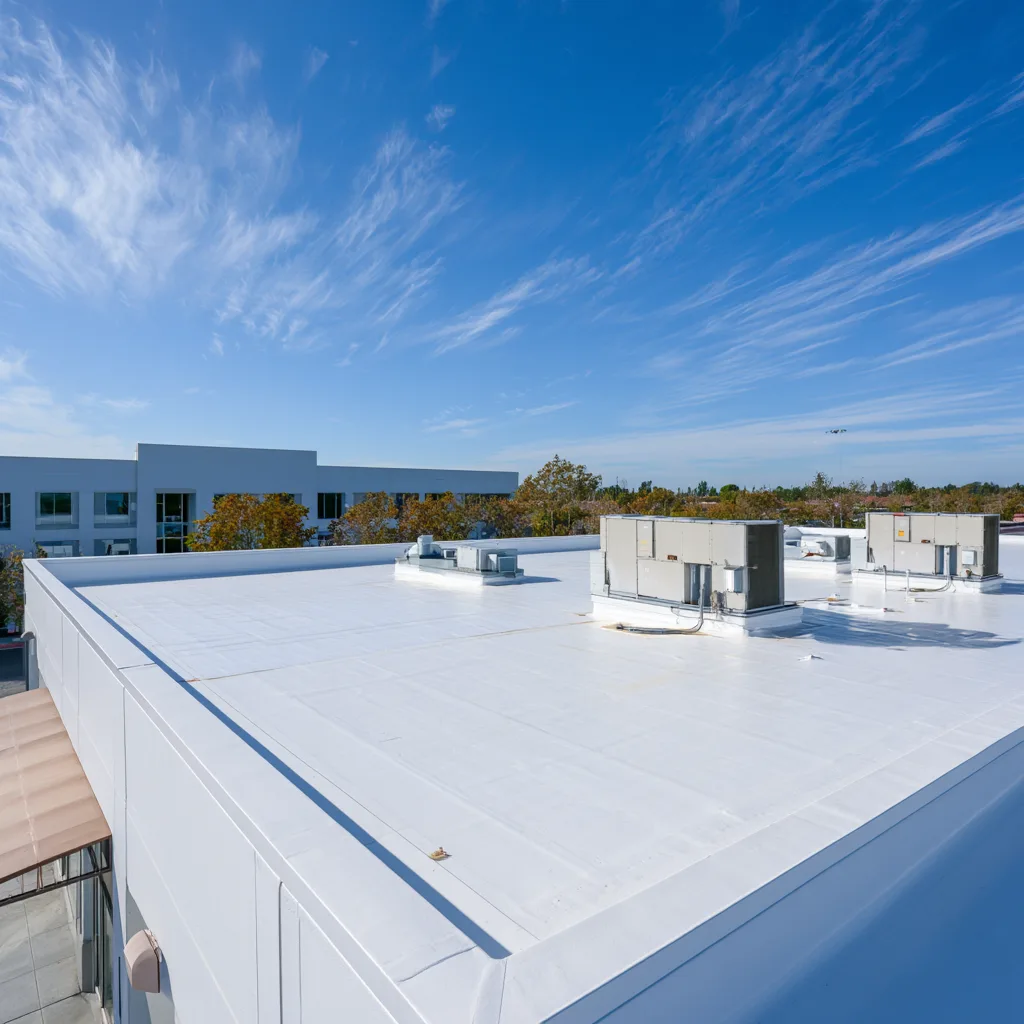
Roof coatings in Highland Village
Restoration starts with a roof that can support the coating.
Start with the roof beneath the coating
A coating can restore the surface of a suitable existing roof while retaining much of the assembly. Its usefulness depends on what is being kept: the membrane or roof surface, the layers below it and the attachment holding them together.
Coating over wet insulation or failed roofing does not make that underlying condition sound. The roof needs evaluation first, including any leaks and the material to which the new coating must adhere.
For a Highland Village building, the initial question is whether the present roof is a good restoration candidate. A free inspection helps frame that decision before discussing a coating system or treating restoration as a substitute for replacement.
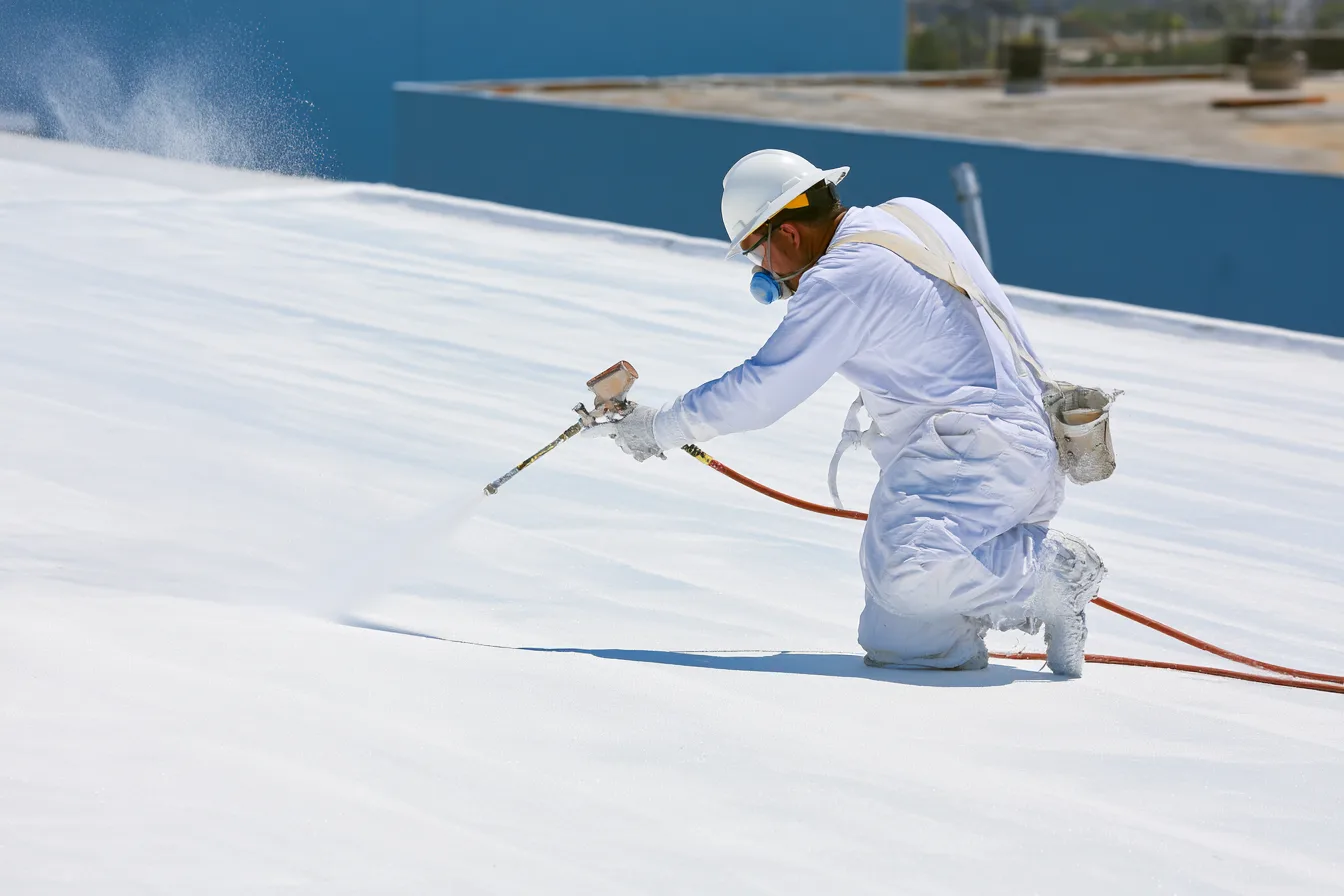
Preparing a Highland Village roof for coating
Preparation is part of the roof work, not a small step after a coating has already been selected.
- Identify and assess the existing roof
The membrane, prior coatings and surface condition guide compatibility. Moisture concerns need evaluation so retained layers are suitable for restoration.
- Repair the affected areas
Wet or deteriorated material needs its own repair or replacement. Seams, curbs, penetrations and other failed details must be corrected before the field receives its new coating.
- Clean and test adhesion
The surface needs preparation appropriate to the selected system. Adhesion testing helps establish whether the coating can bond and whether primer or further preparation is needed.
- Apply the specified system
Coverage, thickness, weather conditions and curing depend on the coating product and substrate. A uniform-looking surface alone does not establish that the installed system meets its requirements.
Where coating fits and where it does not
Restoration works when the roof that remains can support it.
Planning a roof restoration project
The choice includes the roof's present condition and how it will be maintained after the work.
- System compatibility
An aged TPO roof and an asphaltic roof may require different preparation and coating systems. Manufacturer requirements govern the selected combination.
- Details and application conditions
Corners, seams and penetrations need their specified treatment. Weather and cure conditions influence how the application is sequenced.
- Drain access and future roof traffic
Restored roofing still needs clear drainage and appropriate care around equipment. Keep planned service routes in the conversation.
Highland Village roof coating FAQs
Can TPO be coated?
A suitable TPO roof can be restored with a compatible system after assessment, repairs, cleaning and adhesion testing. Not every coating is suitable for every membrane.
Will coating stop an existing leak?
The leaking detail needs to be identified and repaired as part of the project. Applying coating across the field is not a substitute for correcting a failed seam, curb or wet layer.
Does coating fix standing water?
It does not change the slope or remove a blocked outlet. Drainage problems need their own solution, and the coating must be suitable for the conditions that remain.
Is coating always less expensive than replacement?
No. Required preparation, damaged layers and details affect the work. Compare the complete restoration scope with replacement once the roof's condition is understood.
Find out whether restoration fits.
A free inspection helps frame the roof condition and preparation needed before a coating decision.