TPO roofing
Welded seams, membrane condition and attachment determine repair and replacement choices.
Explore the details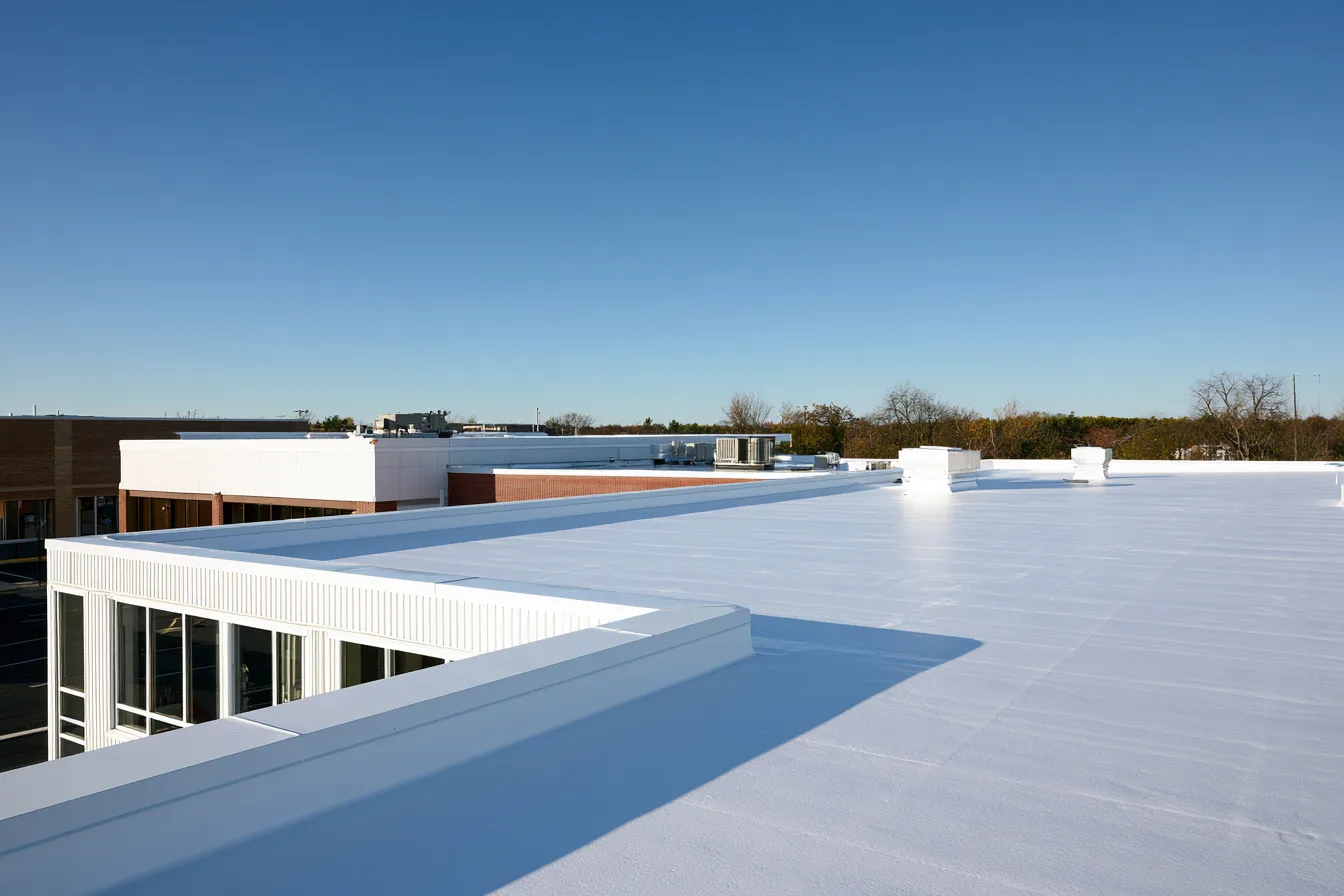
Keep roof work connected to the building, its drainage and the people using it.
A leak over occupied space needs attention, but the visible drip does not define the whole project. On a low-slope roof, water can travel through the assembly before reaching the room. We look at the membrane, seams, flashings, drains and the condition of the materials below.
The useful choice is the one the existing roof can support. A compatible local repair can restore a defined failure. A coating can renew a suitable surface after preparation and repairs. Wet insulation, poor attachment or broad deterioration can require removal and replacement of affected areas or the roof system.
The building matters as well: access, tenant entrances, business operations and rooftop equipment help determine how the work is planned.
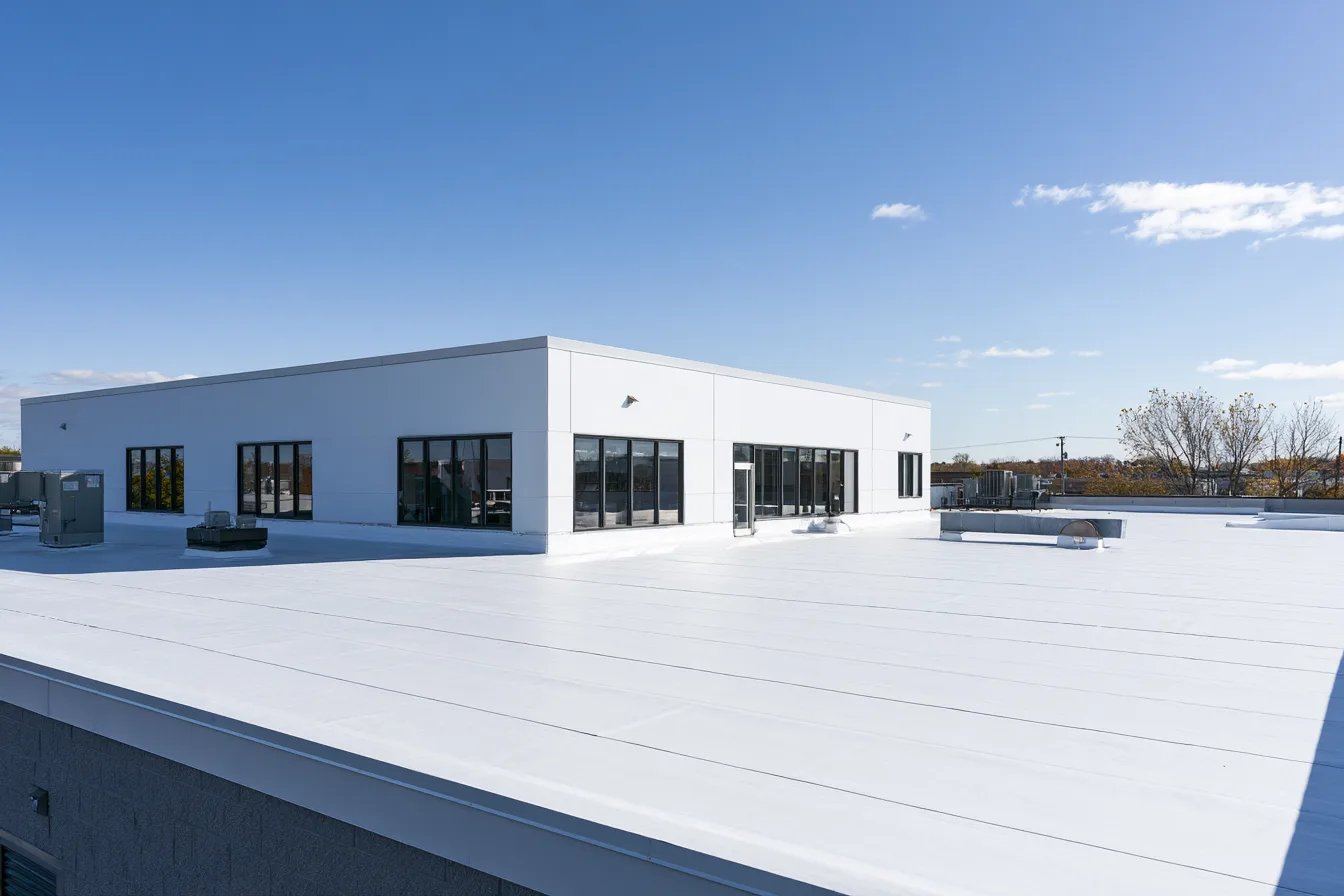
Welded seams, membrane condition and attachment determine repair and replacement choices.
Explore the detailsA suitable substrate, moisture assessment and adhesion preparation come before the coating.
Explore the detailsTrace the leak through drains, curbs, seams and penetrations, then repair with compatible materials.
Explore the detailsA roof covering is only the exposed part of the system. Its condition should be read together with drainage and the building’s use.
We examine open or stressed seams, punctures and flashing around equipment curbs, pipes and walls. A patch must bond or weld to suitable material; covering an incompatible old patch can create another weak connection.
Blocked drains and low areas keep water on the roof. Clearing a blockage is different from correcting a slope problem. Where leakage suggests wet insulation, the affected layers need evaluation before the project is treated as a surface repair.
Roof access, material movement, occupied areas and equipment service paths affect the work. Identifying these constraints early helps the roofing plan account for the building that remains in use.
Size is only the beginning of a commercial roof budget. The layers retained or removed and the work at each interruption make a substantial difference.
Wet insulation and damaged decking change both removal and reconstruction. They cannot be priced responsibly as if the roof needs only a fresh surface.
Curbs, drains, perimeter edges and penetrations add detail work. Keeping equipment access clear protects the purpose of the roof after the project.
Occupied areas and access restrictions influence sequencing and setup. Tell us how the building is used and which spaces are affected by the leak.
Yes, if the failure is defined and the adjoining roof and underlying layers can support a sound repair. Leakage or moisture extending farther through the system widens that scope.
No. A coating restores a suitable existing roof surface after preparation. A new membrane is a separate roofing layer with its own attachment and flashing design. Neither choice removes the need to resolve wet materials and drainage concerns.
Yes. Curbs, pipe openings and service access affect the roof. Knowing about equipment changes helps keep the roofing details coordinated with those changes.
Tell us about the roof concern, occupied spaces and equipment that affect the work.