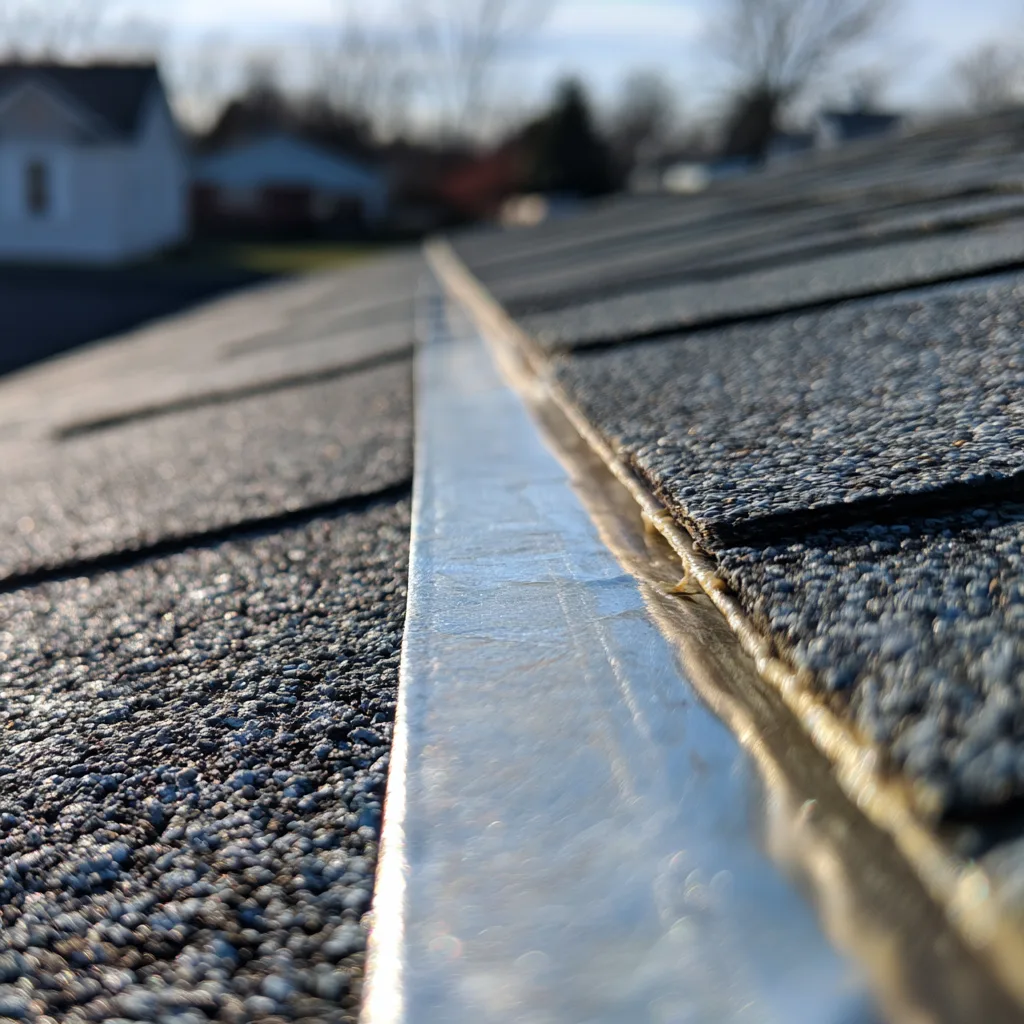
What happens when leaves collect in a roof valley
A valley is the channel where two sloping roof planes meet. It receives runoff from both sides, which makes a clear water path especially useful. Leaves that collect there can change how rain moves across the roof.
Why the valley needs a clear path
On an open slope, rain moves over successive shingle overlaps. At a valley, water from two slopes is concentrated into a narrower route. Leaves and small twigs can accumulate along that route instead of passing straight off the roof.
As the debris builds up, it can slow drainage and hold moisture against the surface. It can also hide damaged covering from a ground-level view. Water overflowing beside a valley is a reason to look at both the blockage and the roof beneath it.
Debris and damaged covering need different work
Clearing leaves restores a blocked route, but it doesn't replace a torn shingle or correct failed valley material. Conversely, patching damaged covering without addressing the debris leaves the water path obstructed.
A roof check examines the valley's surface, the adjoining shingles and their connections. If damage continues into underlayment or decking, the repair needs to reach those layers before the area is closed again. Where the surrounding roof remains sound, that work can be limited to the affected area.

When a closer roof check is useful
A recurring pile of debris, water spilling where it hasn't before or a leak after rain gives the roofer a useful starting point. Describe what you've seen from a safe location; you don't need to climb up to clear or diagnose the valley.
A free roof inspection can distinguish a drainage concern from damaged roofing. If material has failed, the roof repair should restore the valley and its connection to the surrounding covering.
Have a valley or drainage concern?
Share what you've noticed from a safe location. A roof inspection can distinguish debris from damaged roofing.