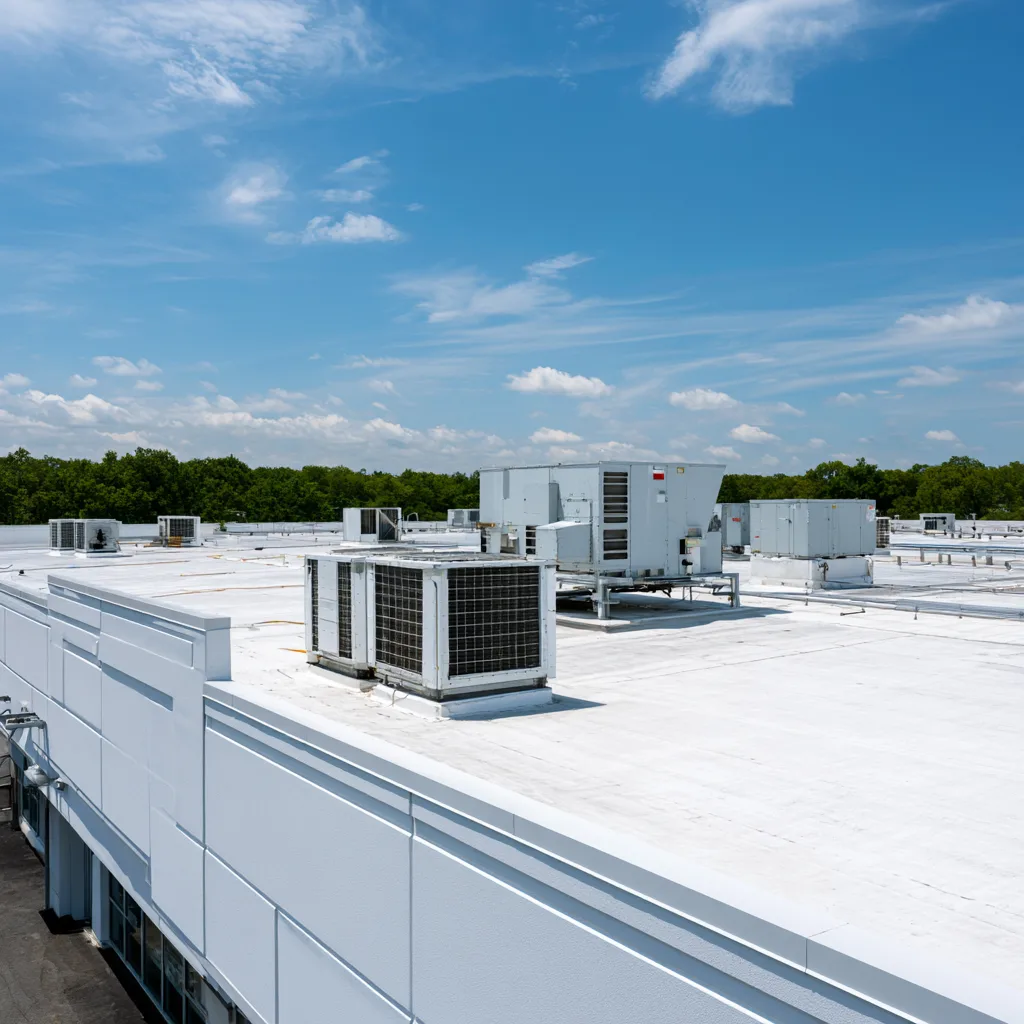
Checking a commercial roof after equipment work
Rooftop equipment needs service, and that means people, tools and replacement parts travel across the roof. After equipment work, a new leak deserves a look at the nearby roofing without assuming that one trade caused every problem.
A service path is part of the roof’s working life
The route to a rooftop unit can receive repeated foot traffic. Dropped tools, dragged components or newly positioned supports can also change conditions on the membrane. A worn surface, puncture or displaced detail needs to be understood in relation to the existing roof system.
If a leak starts after a visit, share when it appeared and which equipment was being serviced. That information helps direct attention, but the water entry point may still be elsewhere because water can travel through a low-slope assembly.
Look at the curb and penetration details
The roof membrane must connect around the unit's curb, pipes and other openings. Corners, the base of the curb and its upper termination each have a role. Altering equipment can affect one of these details even if the main roof field looks unchanged.
The repair should use compatible material and reach sound roofing. If moisture has entered the insulation, sealing the visible opening alone won't dry the layer beneath it. The affected area needs assessment as part of the scope.
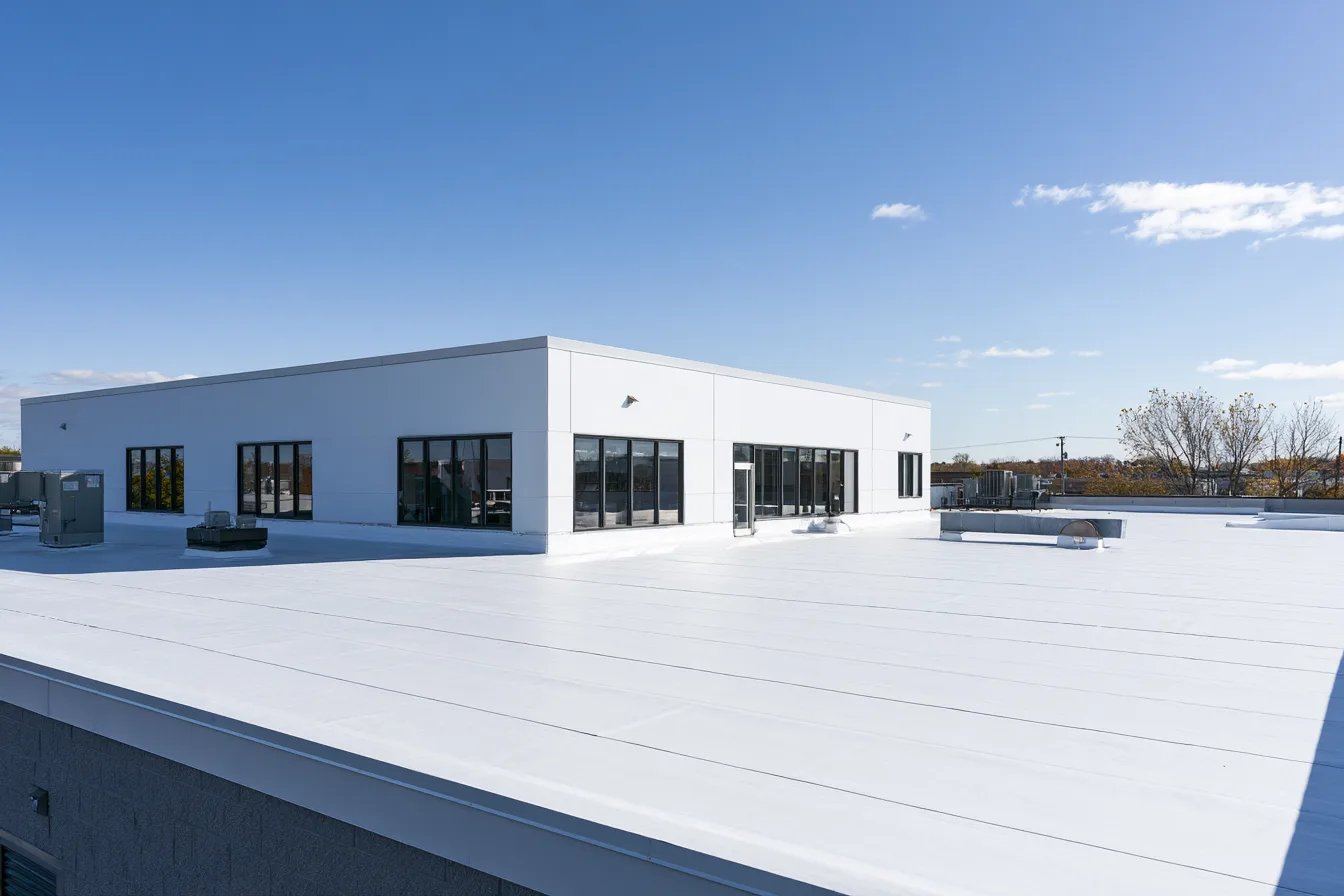
Coordinate the roof repair with the equipment change
When a unit, pipe or support is being moved, the new roof connection should be planned with that work. The equipment needs proper support and service access, while the roofing needs continuous flashing and an open drainage route.
Our commercial roofing guide explains repair, restoration and replacement choices. For an active concern, tell us about the building, the leak and any recent rooftop work so the inspection can start with that context.
Tell us what changed on the commercial roof.
Describe the leak and any recent rooftop work. We can examine the relevant roofing connections.